What’s the secret to performing under pressure?
Performing under pressure - Part One

What enables someone to perform under pressure?
Performing under pressure is usually defined as being able to perform at your best when it really matters.
The final of Wimbledon. The penalty shoot-out in the World Cup. The actor auditioning for the lead role in the Hollywood movie. The final putt a golfer makes at the US Open.
But even the greatest performers will have had experiences of finding it much more difficult to perform in certain situations.
Frustratingly, it’s usually the very situations where it’s most important for them to perform at their best.
For example, if you watch the final of Wimbledon you can see one of the finest tennis players in the world find it much more difficult to serve in the final game.
It’s almost like their body just stops working as well as it usually would at the very moment that they really need it to work.
Why does that happen?
They are, after all, one of the finest tennis players in the world otherwise they wouldn’t be in the Wimbledon final. And serving is something they do every day without even thinking about it.
And they’re not necessarily thinking a lot about it at that moment when they’re just about to serve for the match.
But the importance of this moment has been building up for years.
Because if they get the ball over the net and become Wimbledon champion…
… then the last twenty years of sacrifice, dedication and perseverance will have been worth it.
… and all the people who thought they wouldn’t get anywhere will be proved wrong.
… and they’ll have finally proved they’re ‘good enough’.
… and people will see them the way they see the other great tennis players.
And now all they need to do to make all of this happen is to get that ball over the net.
And now, the stakes are so high it can become physically impossible to do.
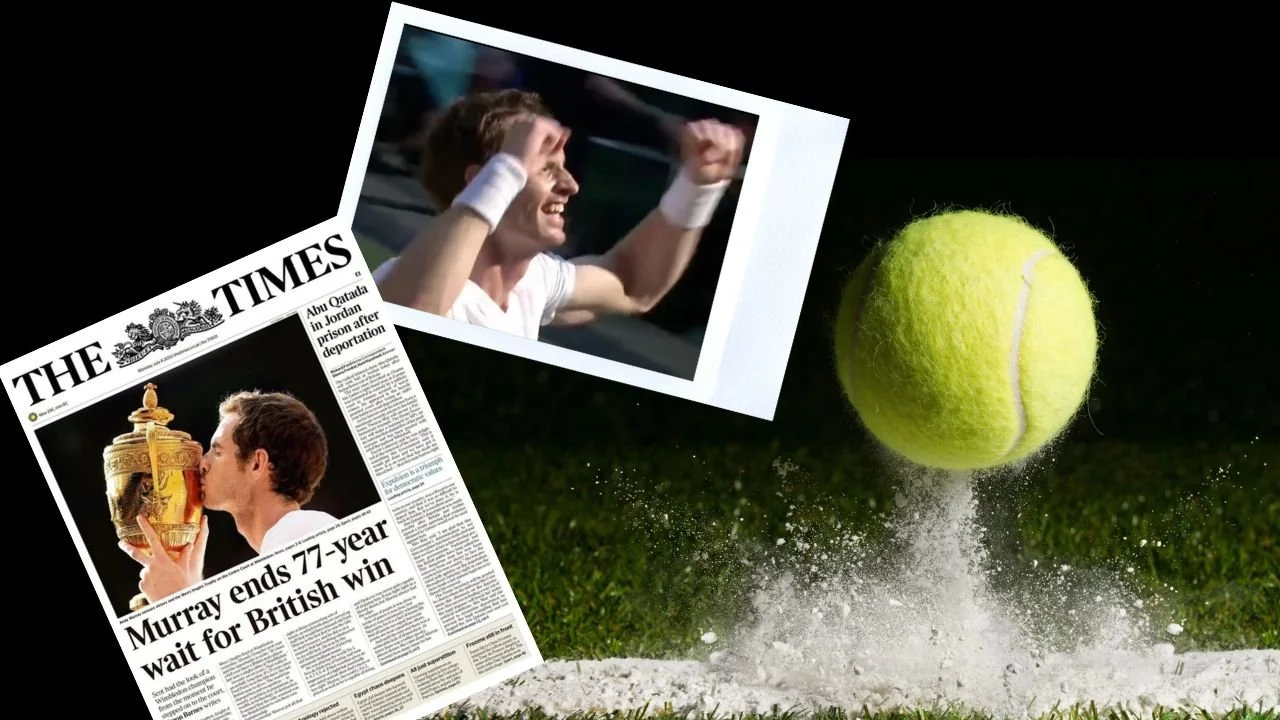
So what causes pressure?
Performers experience pressure because of what’s at stake.
The more that they stand to gain or lose, the higher the pressure.
But to the tennis player, it can really seem like it’s the situation they’re in that creates the pressure. And all the talk of ‘the pressure of Wimbledon’ will seem to confirm that.
But as Rafael Nadal once said, “Pressure is something you put on your own shoulders. It doesn’t come from anywhere else.” Which is good news, because if it did, there would be nothing that anyone could do about it.
And there’s an easy way to demonstrate this.
Take two situations in which different performers really feel the pressure. The final of Wimbledon for a tennis player. A life changing moment.
And an actor auditioning for the lead role in a Hollywood movie that could make them into an ‘overnight success.’
There’s a lot at stake for both of these performers.
But if we send the tennis player into the audition for the movie and ask the actor to play in the Wimbledon final, they won’t experience pressure.
The tennis player might feel quite self conscious about being asked to act, as most people who aren’t actors would.
The actor might be in a state of shock when the tennis player over the other side of the net fires a ball at them at 130 miles an hour.
But they won’t experience pressure.
The tennis payer has no desire to make it as an actor. They don’t define themselves by how well they act.
Similarly, the actor hasn’t dedicated years to practising tennis, so there’s no pressure on them to win to make all of that worth it.
Most importantly, the tennis player has no expectations of getting the part, in the same way that the actor doesn’t expect to become Wimbledon champion.
And if you gave the tennis player an Oscar, it would be meaningless to them, in the same way that handing the actor the Wimbledon trophy wouldn’t represent any kind of achievement for them.

So the pressure doesn’t come from the outside.
The pressure comes from what they stand to gain or lose. The stakes exist in their minds.
But why does raising the stakes make it physically more difficult to perform?
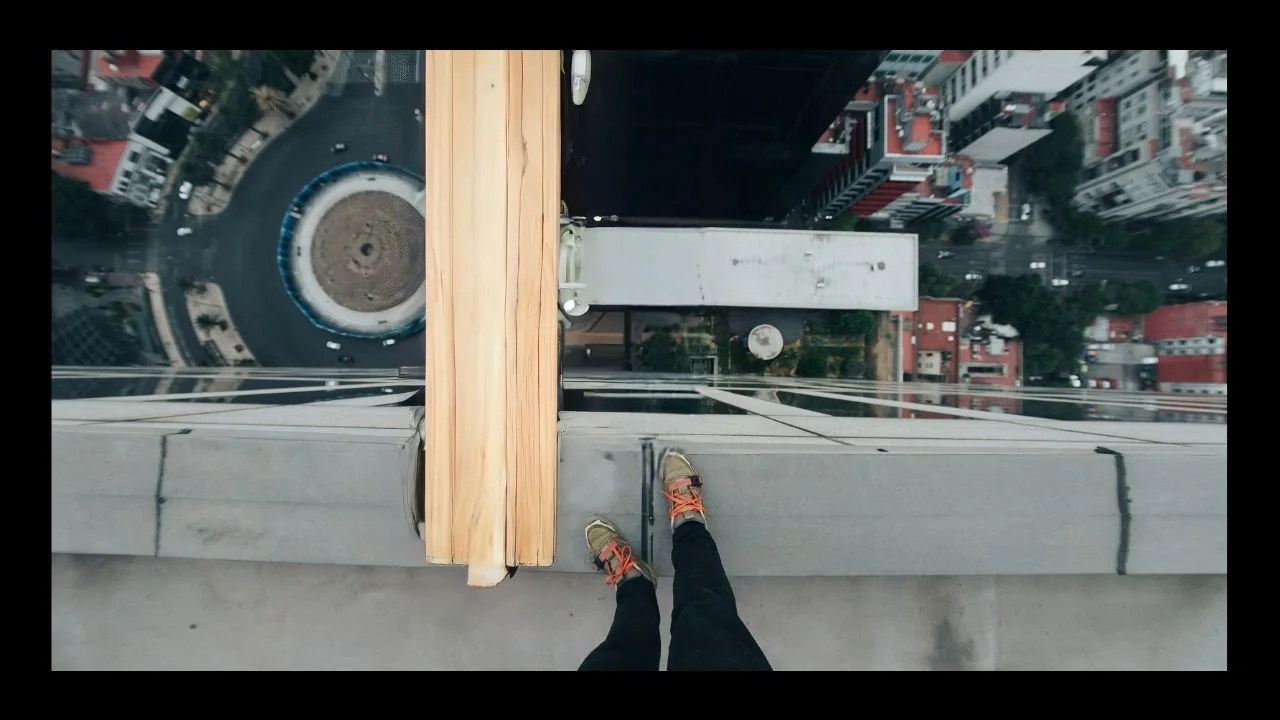
Imagine that someone puts a plank of wood down on the floor and asks you to walk across it. You can do that, no problem.
But now imagine that the plank is raised up and placed across the gap between two tall buildings with a hundred foot drop below…
…and you’re given a week to think about it.
Now the stakes are life or death.
So when the time comes to walk across, you’re going to be in a state of mind that makes it physically impossible to walk, even though it requires the same skill as it did when the plank was on the floor.
So if the stakes are too high, it can become physically impossible for someone to use the very skills they use easily in other situations.
And people often talk about learning to ‘handle the pressure’, which implies that they just need to learn to cope with what ‘happens to them’ in certain situations.
But that’s not what top performers do to perform at their best under pressure.
They do something completely counterintuitive in their minds.
They lower the stakes.
They make the end result less important, in order to make it possible to achieve because the end result is so important.
Now, that may sound like an impossible task.
But any time anyone is performing well in any situation they will have lowered the stakes in their mind, without even realising that they were doing it.
So the ability to do this is already there.
For example, when a young tennis player competes in a Grand Slam for the first time, they typically don’t think they can win. So there’s nothing at stake. They have nothing to lose.
In fact, they’ve already achieved the result they wanted just by being there.
And because they’re not focusing on the end result, they often perform better than anyone expected. Sometimes they even win.
The only problem is that, now they’ve won, they know it’s possible and they want to do it again.
But now they’re focusing on the end result, which stops them from using the very mindset that just worked so well for them.
Performers discover different ways of lowering the stakes at various stage of their careers and always perform better as result.
But they usually do that by chance, rather than by design.
It is possible to replicate that mindset to order, but there’s one key obstacle that stops people from doing that.

In 2025, Coco Gauff won the French Open.
What enabled her to perform at her best that day?
It wasn’t just the skills and abilities she’d spent years developing.
She was able to produce that winning performance by lowering the stakes in her mind. She made the end result less important.
But afterwards she spoke about a different mindset she had before going into the final. It’s a mindset that many people would describe as a ‘winning mentality’.
But it’s a mindset that can make it more likely that someone will lose, even though they have the ability to win.
And here’s the major obstacle.
Strangely, the very mindset that many people think will enable them to perform at their best, can actually stop them from doing just that.
Part Two. Coming soon…..
Sign up to the newsletter
Be the first to discover what’s new…